
Isoguanosine exerts anticancer effects in Huh-7 cells by modulating ROS-dependent MAPK and AKT signaling
Abstract:
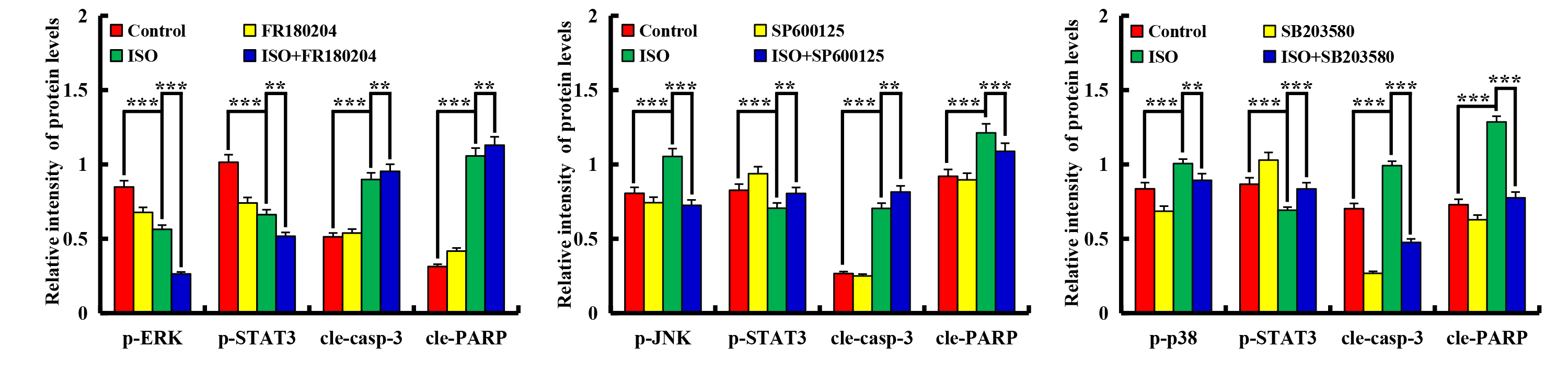
Isoguanosine (ISO) is a naturally occurring bioactive compound with multiple pharmacological properties. In this study, the inhibitory effects of ISO on hepatocellular carcinoma (HCC) cells and its underlying molecular mechanisms were investigated. The cell viability after ISO treatment was assessed using the CCK-8 assay, trypan blue staining, and Hoechst 33342/PI double staining. The relevant targets of ISO and their regulatory mechanisms were predicted using network pharmacology and molecular docking technology. The induction of apoptosis by ISO on Huh-7 cells was detected by Annexin V-FITC/PI double staining combined with flow cytometry and western blotting. The cell cycle arrest effect of ISO on Huh-7 cells was detected by Ki-67 staining, flow cytometry, and western blotting. The migration-inhibition effect of ISO on Huh-7 cells was detected by the wound healing, Transwell, and western blotting. In addition, the effects of reactive oxygen species (ROS) and protein kinase B (AKT) on Huh-7 cells were investigated by using N-acetyl cysteine (NAC) and AKT inhibitor HY10249, respectively. Cell viability assays demonstrated that ISO exerts a significant cytotoxic effect on HCC cell lines. Network pharmacology analysis revealed that the core targets of ISO are associated with ROS, AKT, and mitogen-activated protein kinase (MAPK) signaling pathways. Molecular docking results indicate that ISO has a strong binding affinity for AKT1, CASP3, and GSK3B. Apoptosis assays indicated that ISO induces apoptosis in Huh-7 cells via the mitochondria-dependent pathway. Furthermore, ISO modulates apoptosis through the MAPK and signal transducer and activator of transcription 3 (STAT3) signaling pathways. Cell cycle assays showed that ISO induces G2/M phase arrest by elevating intracellular ROS levels. Migration assays demonstrated that ISO inhibits cell migration by regulating the AKT signaling pathway. In addition, pretreatment with NAC reversed ISO-induced apoptosis, cell cycle arrest, and inhibition of migration. ISO promotes apoptosis, induces cell cycle arrest, and inhibits Huh-7 cell migration. These findings provide a theoretical basis for further pharmacological research and support the potential development and application of ISO as an anticancer agent.
Received date: 12/04/2025
Accepted date: 04/08/2026
Ahead of print publish date: 04/16/2026
Issue: 3/2026
Volume: 73
Pages: 169 — 182
Keywords: isoguanosine, hepatocellular carcinoma, cell apoptosis, cell cycle, cell migration, ROS
Supplementary files:
N508 Suppl FigS1-TE1.tif
N508 Suppl FigS2.jpg
N508 Suppl Figure Legends-TE1.docx
DOI: 10.4149/neo_2026_251204N508